
Checking Criminal History in King County
King County does not keep one combined criminal history search. A reader first has to decide whether the goal is a filed court case, a current jail stay, a local agency report, or a statewide conviction summary. Felony files belong to King County Superior Court and its KC Script system. King County District Court cases use KCDC Case Access. Seattle and Kent maintain separate municipal court routes, while Bellevue matters are served through KCDC under contract. A current booking belongs to the Department of Adult and Juvenile Detention, not the court clerk.
Start with a full legal name, spelling variants, date of birth when the official form accepts it, and any cause, incident, or Book of Arrest number already known. A name alone can match more than one person. Compare the King County court, case number, filing date, charges, and final disposition before treating a result as the right King County record.
- Choose the King County record type and the office that created it.
- Search KC Script, KCDC, a municipal court, or Subject Lookup as the facts require.
- Match public identifiers without relying on a name alone.
- Open the King County docket, booking entry, or agency request channel for detail.
- Request a certified King County court copy or fingerprint-linked review when the use calls for stronger proof.
The King County government directory is the broad routing point when the responsible department is unclear.
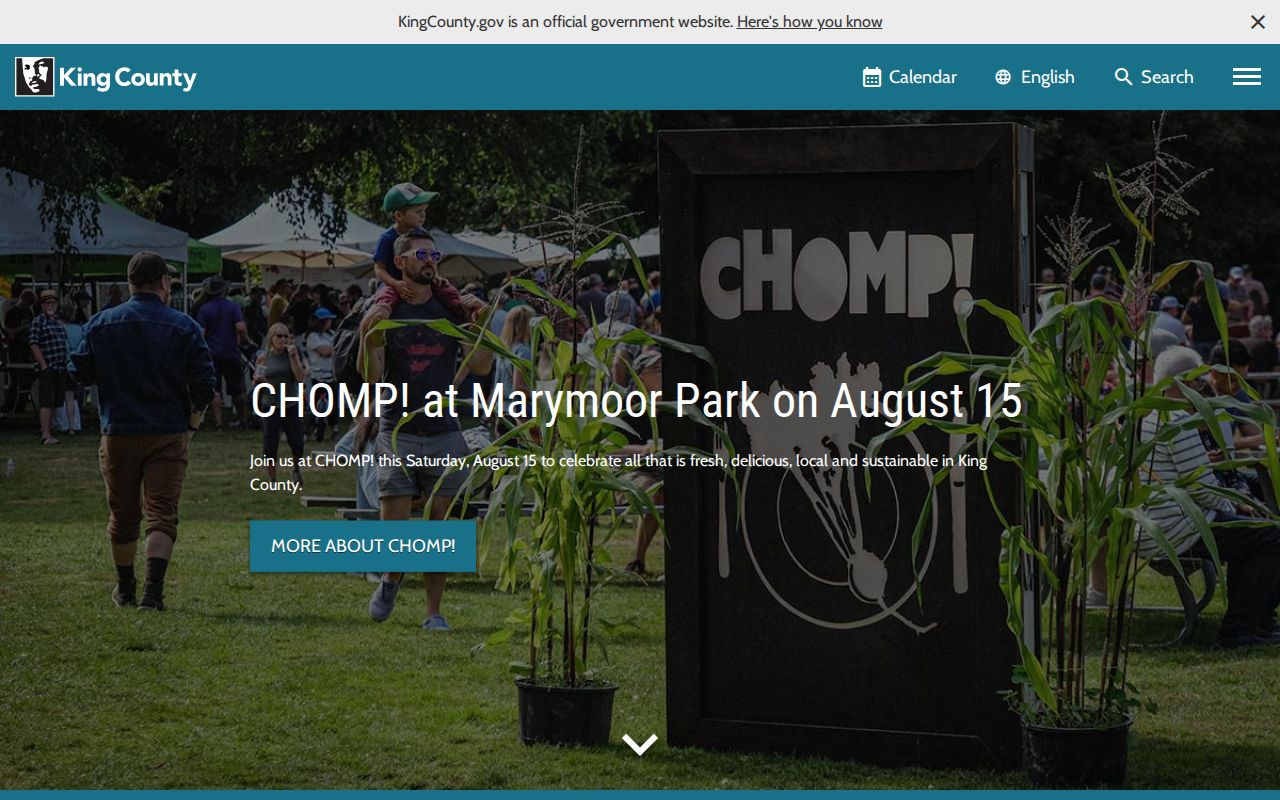
The King County department structure reinforces the first rule of a sound search: route the request to the record custodian, not just to the King County name.
Four King County Record Searches
Four King County systems answer four different questions. KC Script shows King County Superior Court dockets and document services. KCDC returns King County District Court case information, including upcoming hearings, judgments, sentence conditions, warrant status, and the document index. DAJD Subject Lookup answers whether an adult is in current or recent King County custody. WATCH reports qualifying Washington conviction data, recent pending arrests, and registration information sent to WSP.
| Channel | Best use | Key limit |
|---|---|---|
| KC Script | King County Superior Court felony files | Account required; older material may need the clerk |
| KCDC Case Access | King County District Court criminal cases | Public document access is role-limited |
| DAJD Subject Lookup | Current or recent King County custody | A King County custody entry is not a final case result |
| WATCH | Statewide public history response | It is not a full King County court or police file |
King County's official records routing page illustrates these separate channels.
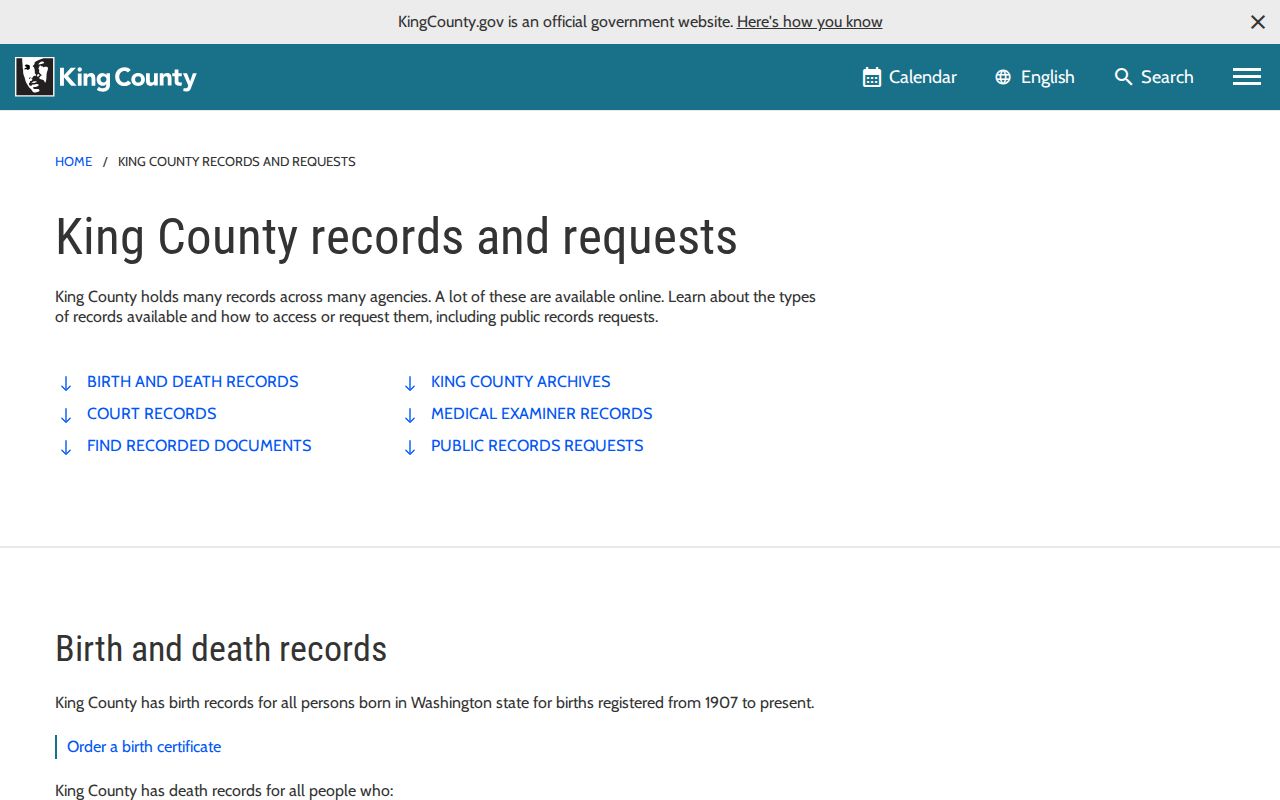
A blank result in one channel may simply mean the King County record lives in another. Washington's Odyssey Portal also excludes King County Superior Court, so its silence is not proof that no King County case exists.
Washington Official Background Checks
The Washington State Patrol Criminal Records Division maintains WASIS, the state repository. Its public product is Washington Access to Criminal History, known as WATCH. The posted online name and date-of-birth search costs $11. A mailed name and date-of-birth request is posted at $32, and an online notary request is $10. A King County WATCH search can include Washington convictions, arrests less than one year old with dispositions still pending, and sex or kidnapping registration data. It does not supply every King County police narrative, pleading, or nonpublic entry in the full law-enforcement file.
The WATCH interface shows why exact birth data and name spelling matter in a King County criminal record search.
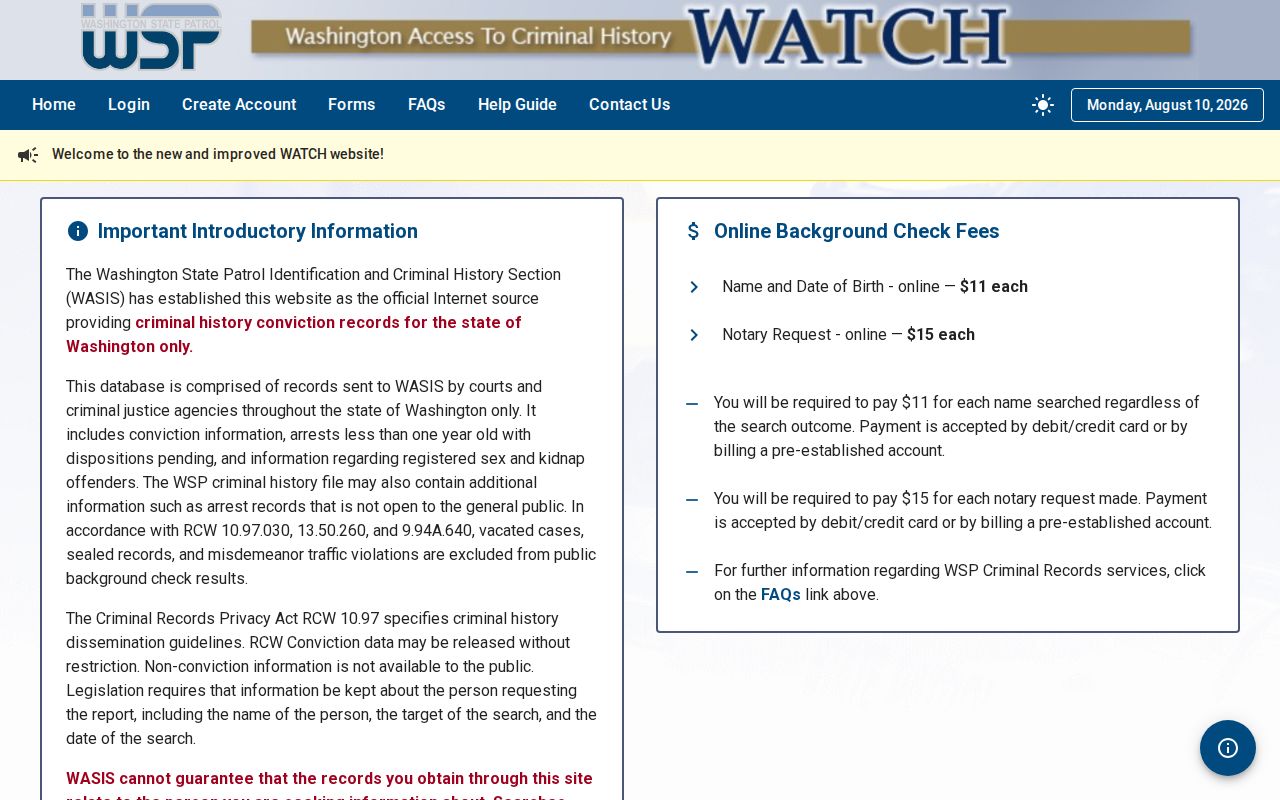
A WATCH response should be compared with the originating King County court when the King County disposition or charge history matters.
| Official product | Posted fee | Identity method |
|---|---|---|
| WATCH online | $11 | Name and exact date of birth |
| WATCH mail | $32 | Name and date of birth |
| WSP fingerprint check | $58 | Fingerprints |
| WSP Olympia fingerprint capture | $16 added | Appointment and fingerprints |
King County Name Matches and Fingerprints
A public name check is useful for self-review, but WSP says fingerprint comparison is the only positive identity match. The fingerprint-based Washington check is posted at $58. If WSP takes the prints at its Olympia service, the listed capture charge adds $16. King County law-enforcement fingerprint sites may set different prices and appointment rules, so confirm the site before travel. King County Sheriff's Office stopped issuing clearance letters in 2018 and now points statewide history requests to WSP.
The WSP criminal-history service page separates public name checks, fingerprint reviews, and record challenges.
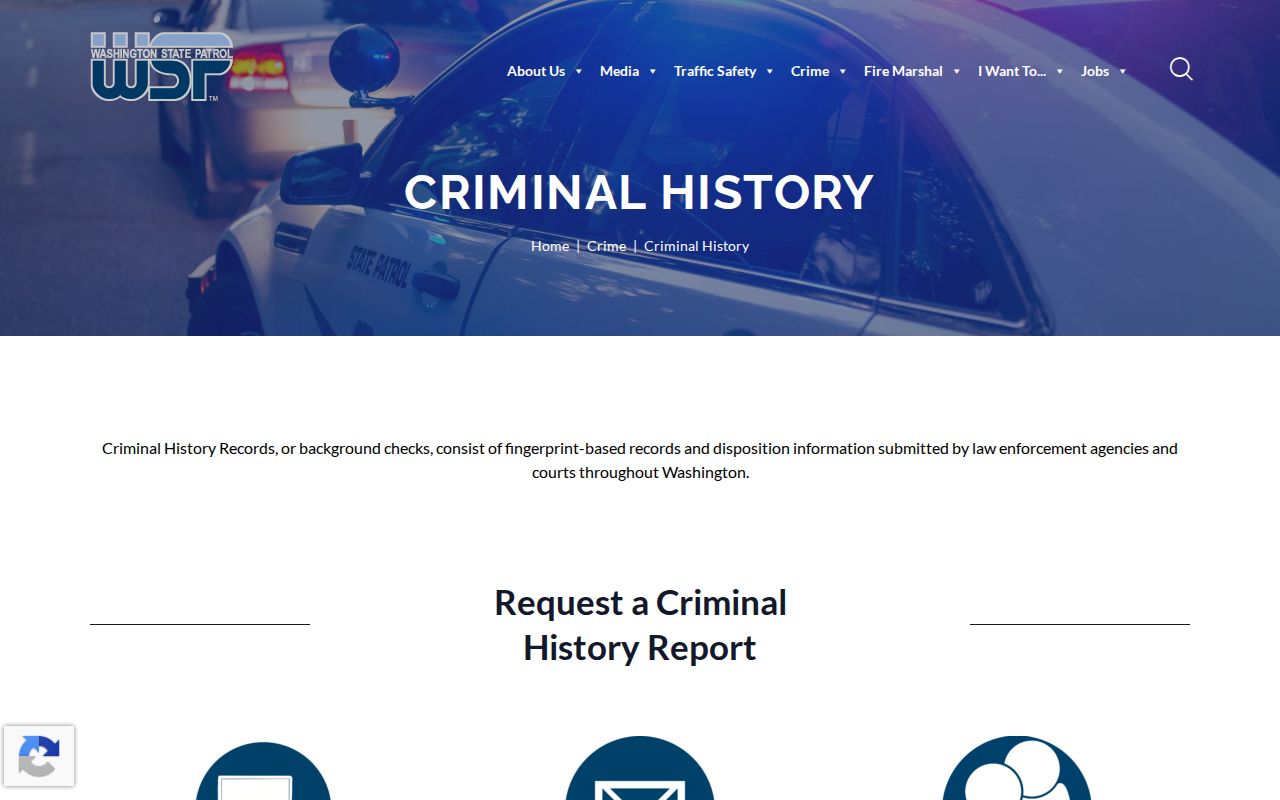
If a King County disposition is wrong in the state response, first verify the source King County court file. The King County clerk corrects the court record, while WSP updates the repository after it checks King County source documents and any required fingerprints.
For a nationwide review of one's own identity history, the FBI uses fingerprints rather than a public name search. Its Electronic Departmental Order route accepts contact and delivery data, payment, and prints sent through an approved channel or on the current fingerprint card.
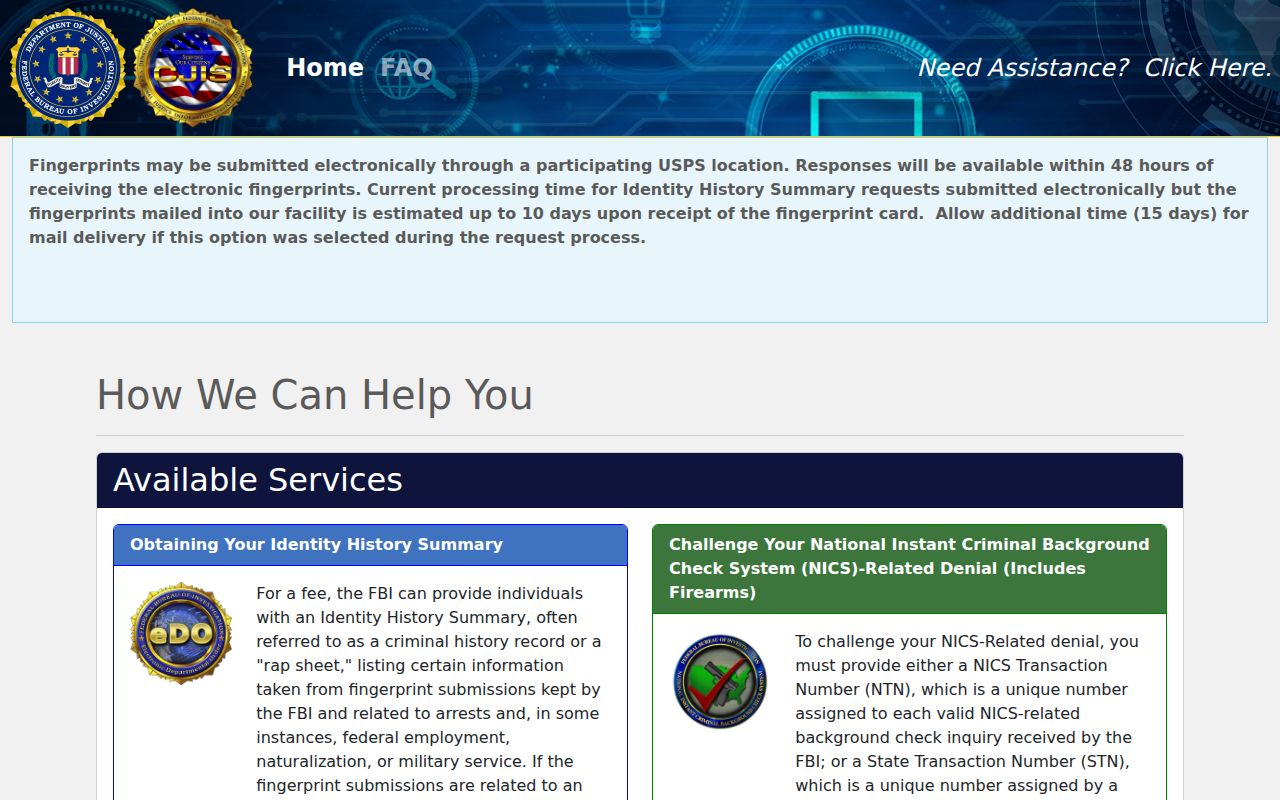
The FBI result serves a different scope from WATCH and does not replace a King County police report or King County court judgment.
Criminal Record Types
King County criminal records form a chain rather than one file. The arresting agency writes the incident or arrest report. DAJD creates the booking record if the person enters KCCF or MRJC. The prosecutor decides what charge to file, and the proper clerk creates the court docket. WSP later compiles qualifying arrest and disposition submissions in WASIS. Each source can be accurate while showing a different stage.
- King County police or sheriff report: the allegation, event facts, evidence, and agency narrative.
- King County booking record: intake time, B/A number, custody site, initial allegation, bail, and release status.
- King County court case file: filed counts, hearings, motions, disposition, judgment, and sentence.
- WSP history: qualifying statewide submissions presented under Washington dissemination law.
- Registry or supervision record: a separate public view with its own access limits.
A dismissed King County case may remain in a King County police or booking archive even when WATCH no longer shows a conviction. Vacation, King County court sealing, and deletion of eligible nonconviction repository data are separate legal tools.
King County Custody Systems Compared
Use DAJD Subject Lookup for adults held at the King County Correctional Facility or the Maleng Regional Justice Center. A King County search can show the facility, Book of Arrest number, booking time, investigation or charge text, and bail when set. If no result appears, the person may have been released, transferred, held in Kent City Jail or SCORE, or moved to state or federal custody. The 24-hour King County jail line is 206-296-1234. King County youth custody uses a separate 24-hour line at 206-263-9595.
The Washington DOC Incarcerated Individual Search covers state custody and community status, not King County jail bookings.
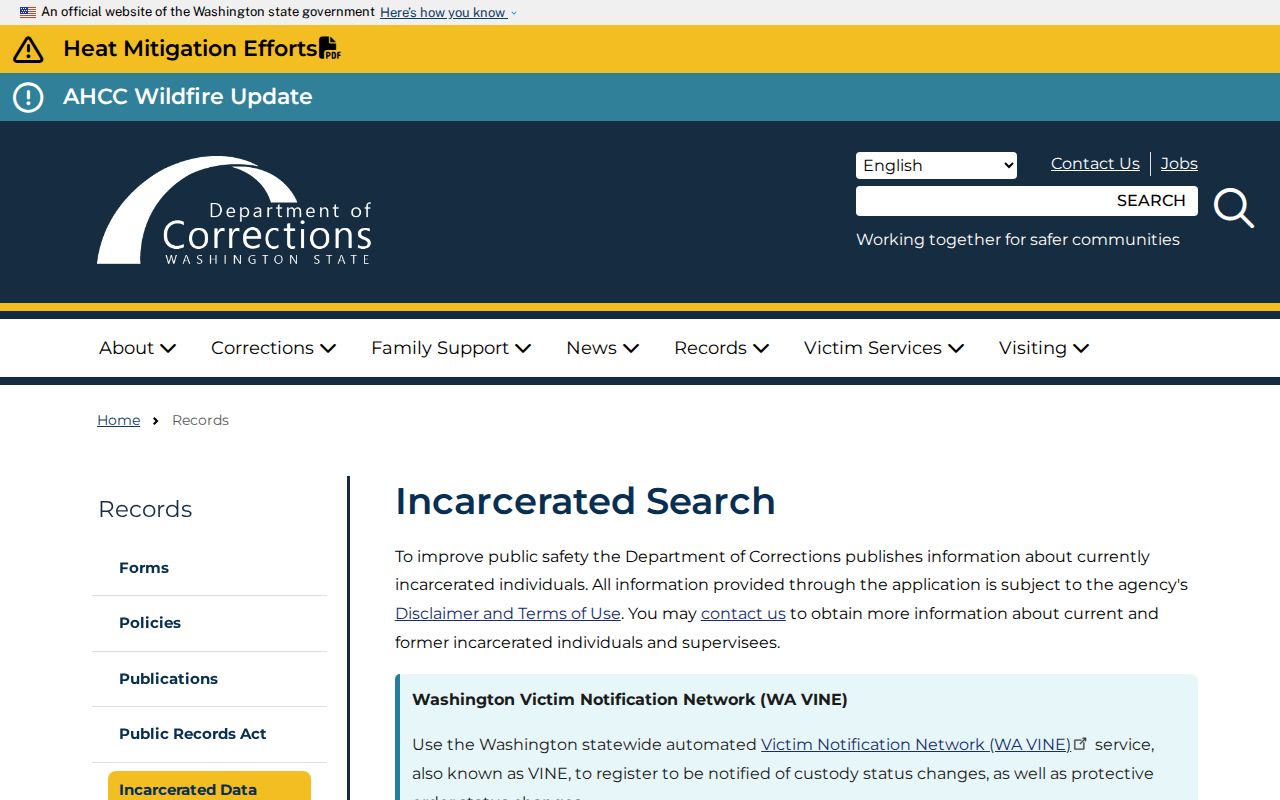
A DOC match should be read with the King County judgment and sentence that placed the person under state authority.
The DOC field-office directory lists community-custody offices across Seattle, Bellevue, Kent, Auburn, Northgate, and West Seattle.
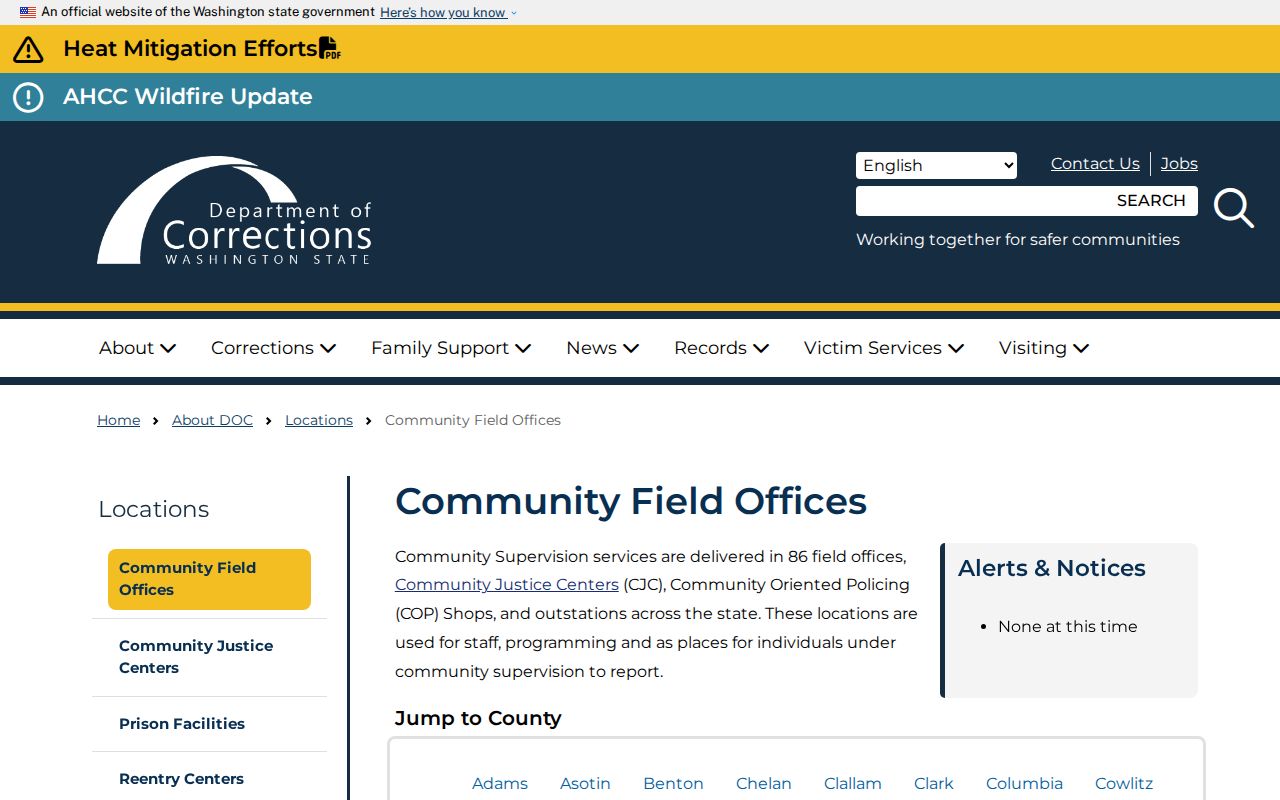
Community custody is Washington's state supervision term. It is not the same as King County court probation, and private supervision notes are not automatically public.
Inside a King County Criminal Record
A complete King County court file ties identity and case data to each count. The King County cause number, filing date, court, case status, parties, charges, hearings, document index, and judgment build the King County legal record. King Superior cause numbers use a case-type digit, with the third digit marking criminal cases as 1 under the local rule. KCDC can add King County sentence conditions and warrant status, while public displays suppress full birth dates, addresses, phone numbers, and other protected identifiers.
| King County name and identifiers | Public name and aliases, with sensitive identity fields limited or redacted. |
|---|---|
| King County arrest and booking | Agency, date, event or B/A number, custody site, and release facts where public. |
| King County charges | Each count, statute, offense level, amendments, and count-specific result. |
| King County docket | Filed papers, hearings, orders, warrants, and case events in date order. |
| King County disposition | Conviction, dismissal, acquittal, or another result for each count. |
| King County sentence | Confinement, community custody or probation, restitution, fines, and conditions when public. |
Read every King County count. An initial allegation can be changed or dismissed while another count ends in conviction. The judgment and sentence is the operative source for the final King County court result.
King County Records at 516 Third
The King County Courthouse at 516 Third Avenue holds several record functions, but each has a different counter. King County Superior Court Clerk services handle case documents. KCSO Public Disclosure works from Room W-116 for sheriff reports. Sex-offender registration administration is in Room W-150. The King County Prosecuting Attorney also has courthouse functions, but that office is not the King County clerk and does not replace the official King County court file.
King County Superior Court Clerk
516 Third Ave., Room E-609
Seattle, WA 98104
206-296-9300
Copy help: 206-477-0832
KCSO Public Disclosure, King County
516 Third Ave., Room W-116
Seattle, WA 98104
206-263-2103
Weekdays, 8:30 a.m. to 4:00 p.m.
Maleng Justice Center, King County
401 Fourth Ave. N.
Kent, WA 98032
206-477-3012
Superior Court copy center
King County offers free in-person inspection of most King County Superior Court records. Older or missing material may require King County clerk help, and criminal files before 1979 can follow a microfiche or archive route.
Public Access Laws in Washington
Washington applies different access rules to local agency records and county court files. The Washington Public Records Act governs executive and local agency material. It requires an initial response within five business days, but that response may be an acknowledgment and time estimate rather than completed production. Court case access chiefly follows GR 31, while GR 15 governs sealing, redaction, and destruction. The responding office may redact victims, witnesses, juveniles, health facts, account data, and material protected during an active investigation.
Key Washington rules:
Chapter 42.56 RCW opens King County agency records unless a stated exemption applies.
RCW 10.97.050 sets public dissemination rules for conviction and recent pending data.
RCW 10.97.040 requires available dispositions to accompany qualifying King County arrest and charge data.
GR 31 controls public access to King County court case records.
A King County public-records request asks for an identifiable record. It does not require an agency to answer a question or create a new report. A denial should identify the exemption and explain how it applies.
King County Records Requests and Fees
KCSO prefers its GovQA Public Disclosure route, though a paper form may be mailed. Give the incident number, date, time, location, involved name, and a precise description of the King County record. The Public Disclosure Unit can be reached at 206-263-2103 or kcsodisclosure@kingcounty.gov. The King County Sheriff's Office serves unincorporated areas and its contract jurisdictions, but it does not hold every King County-area report made by Seattle, Bellevue, Kent, Port of Seattle Police, or WSP. Check the badge or event paperwork before filing.
| KCSO service | Posted amount |
|---|---|
| Inspect King County records | $0 |
| Scan King County paper records | $0.10 per page |
| King County electronic upload | $0.05 per four files if the statutory schedule applies |
| King County electronic transmission | $0.10 per gigabyte if that schedule applies |
| King County shipping and container | Actual cost |
Ask for an estimate because the applicable schedule, deposit, installment plan, and copy format can change the total. King County jail and incarceration files go to DAJD through its Incarceration Records or Jail Operations Records channel, not to KCSO.
Sealed, Expunged, and Restricted Records
Washington usually calls conviction relief vacating, not expungement. Misdemeanor and gross-misdemeanor requests use RCW 9.96.060, while qualifying felony requests use RCW 9.94A.640. The motion belongs in the King County court that imposed the judgment. Eligibility depends on the offense, completion of the sentence and financial terms, pending charges, and the statute's exact waiting rules. DUI and many violent or sex offenses have special exclusions. No single waiting period fits every King County case.
Sealing is different. GR 15 can restrict a court file when the required interests and findings are met. RCW 10.97.060 addresses deletion of qualifying nonconviction history data held by WSP. Juvenile sealing follows chapter 13.50 RCW. A vacation does not erase every old King County police, King County booking, or King County court record, and a redaction may hide only protected fields rather than the full King County file.
For a King County matter, obtain the docket and judgment, use the current Washington Courts form, file with the King County sentencing clerk, follow the notice steps, and keep certified copies of any signed King County order. If WATCH remains wrong after the clerk transmits the order, use WSP's challenge process.
King County Warrant Records Without a List
King County has no reliable public sheriff name-search list for all active warrants. KCSO also says it will not give warrant information by telephone. KCDC may display warrant status for an eligible District Court case. Superior Court, Seattle Municipal Court, and Kent Municipal Court keep their own case and bench-warrant data. Search the known case, contact the issuing clerk with the cause number, or have counsel verify the safest next step.
An arrest warrant is tied to a charge and probable-cause process. A bench warrant often follows a missed hearing or failure to comply. Search warrants authorize a search and may remain sealed during an investigation. A blank result in one court does not clear a warrant from another. To resolve one, confirm the issuing court, ask about its recall or quash process, attend the required hearing, and retain the written order. Portal status can lag after the court acts.
Note: Do not walk into a police lobby based only on a web result; verify the court, case number, and current procedure first.
King County Criminal Records by City
Seattle, Bellevue, and Kent are King County's three largest incorporated cities in the cited 2024 Census estimates. Their record paths differ. Seattle Police and Seattle Municipal Court each keep city material. Bellevue Police retains police reports while Bellevue court services route through KCDC. Kent has its own police and municipal court, and it also hosts the county's MRJC court and jail complex.
Seattle Criminal Records
780,995 residents · Separate police disclosure and Municipal Court portals
Bellevue Criminal Records
154,377 residents · City police records with KCDC court service
Kent Criminal Records
136,588 residents · City court records plus the MRJC county hub
A city police report will not move into KC Script unless prosecutors file a Superior Court case. The city guides keep that local routing at city level.
King County Criminal Filing Trends
King County Superior Court's 2024 annual report stated that criminal filings rose 5.6 percent from the prior year and reached their highest post-pandemic level. The first quarter of 2025 recorded 1,223 criminal filings, up 4.8 percent in the report's comparison. Those numbers measure filed Superior Court cases, not police calls, arrests, convictions, or all crime in the county. They show clerk and court workload and help explain why a record request may move through a busy system.
King County criminal files also have a long reach. Superior Court records date to 1853, while pre-1979 files may require microfilm or archive work. Named therapeutic courts, including Adult Drug Diversion Court, Regional Mental Health Court, and Veterans Court, can add review entries to an existing docket. Those reviews are not fresh charges.
Federal matters remain outside these county totals. PACER is the official federal docket service.
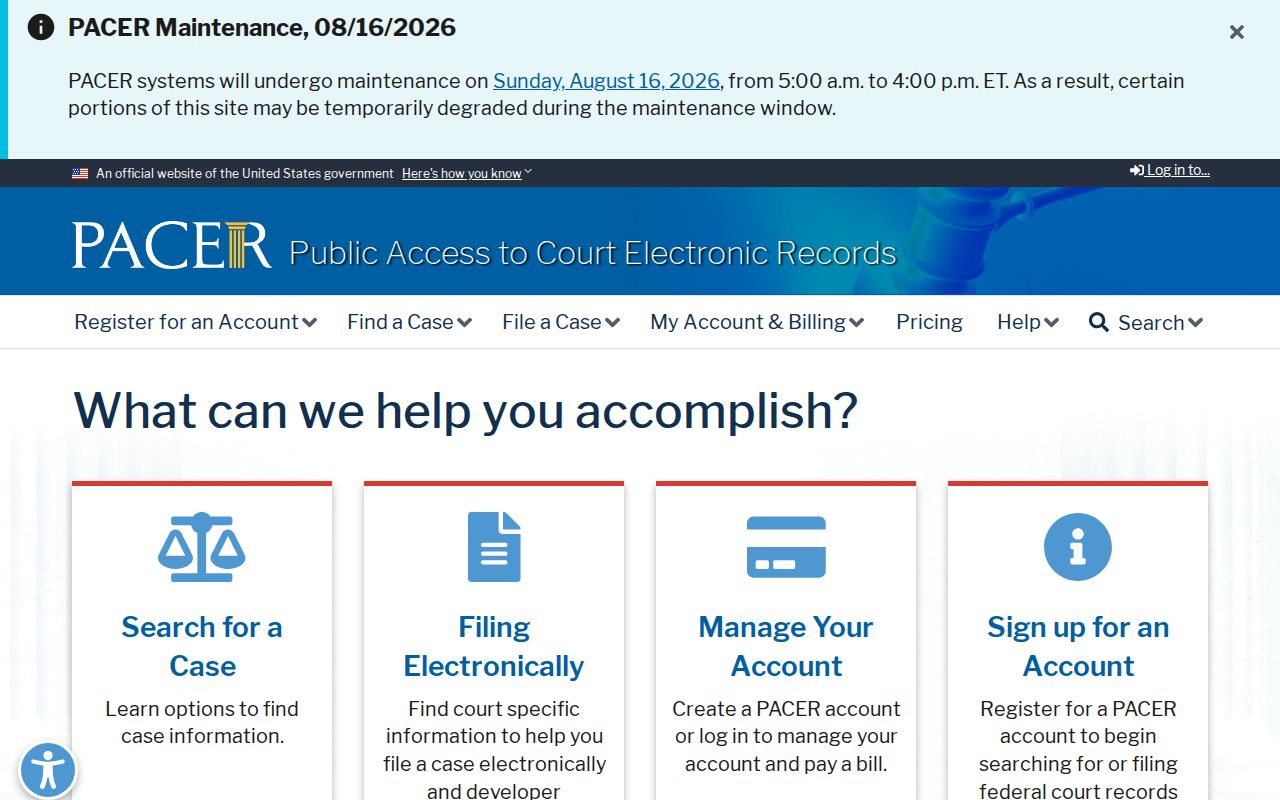
PACER requires registration and can charge per-page fees, while King County court files stay in their local clerk systems.
The Federal Bureau of Prisons locator covers federal custody rather than King County jails or Washington DOC facilities.
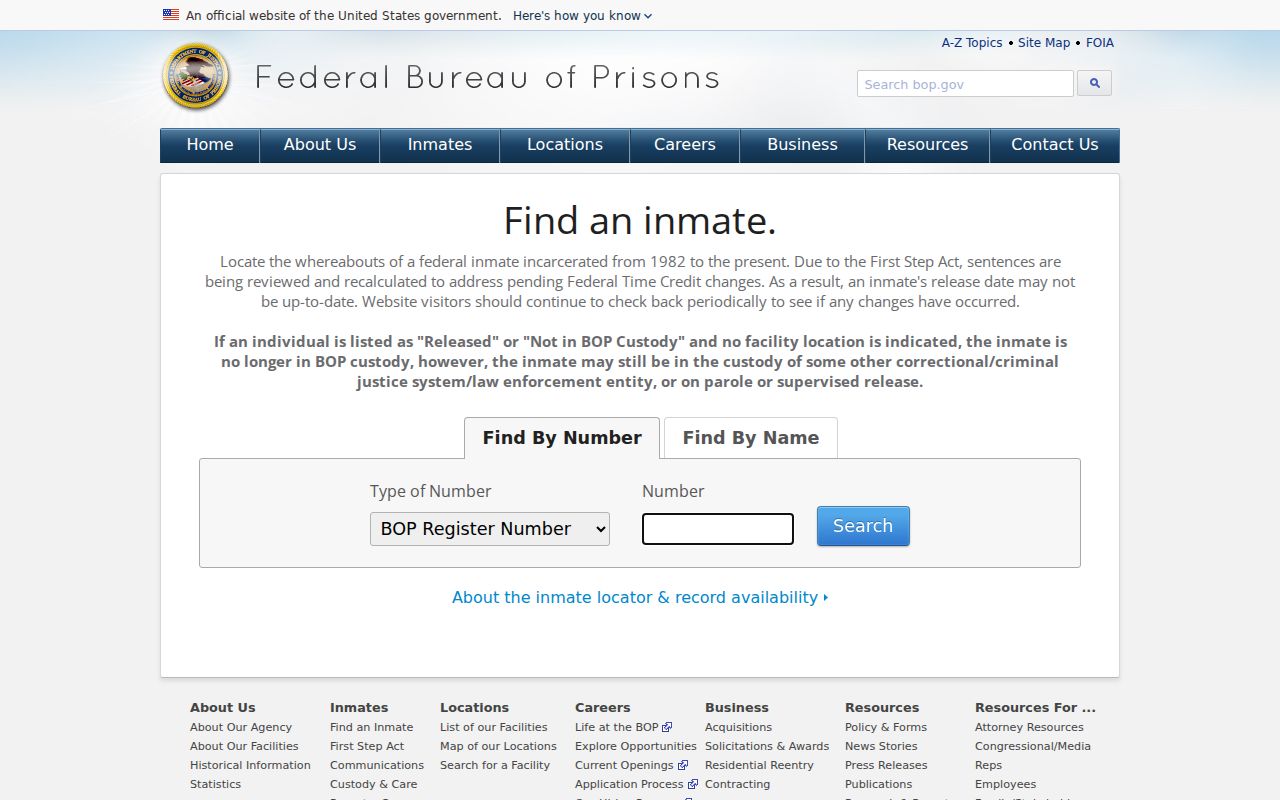
That final custody split is another reason to identify the government level before treating a missing result as a missing record.