
King County Criminal Court Cases
King County Superior Court hears felonies, mainly at the Seattle courthouse and the Norm Maleng Regional Justice Center in Kent. King County District Court handles misdemeanors, gross misdemeanors, traffic infractions, and other limited-jurisdiction work. Seattle and Kent keep city-filed misdemeanor and ordinance cases in their municipal systems. Bellevue uses King County District Court under a service contract. The filing court, not the arrest site alone, determines which clerk holds a criminal case record.
A King Superior cause number identifies the year and case sequence. A King criminal case has 1 as its third digit. The King County clerk keeps the participant index, charging papers, docket, hearing history, orders, judgment, sentence, and public financial entries. King County District Court maintains its own index and adds fields such as sentence conditions and warrant status. A reader moving from an arrest to the filed outcome can use the county's King County arrest lookup for custody context, but the King County court file controls what prosecutors charged and what the judge decided.
KC Script Opens King Court Files
KC Script is the official King Superior Court portal. The portal requires a free account and supports case and participant searches. Public online document review generally reaches criminal cases filed on or after November 1, 2004. A King County docket can identify the document needed, while a Records Request supplies a copy, audio, or certification when available. Finished requests remain ready to download for 14 calendar days.
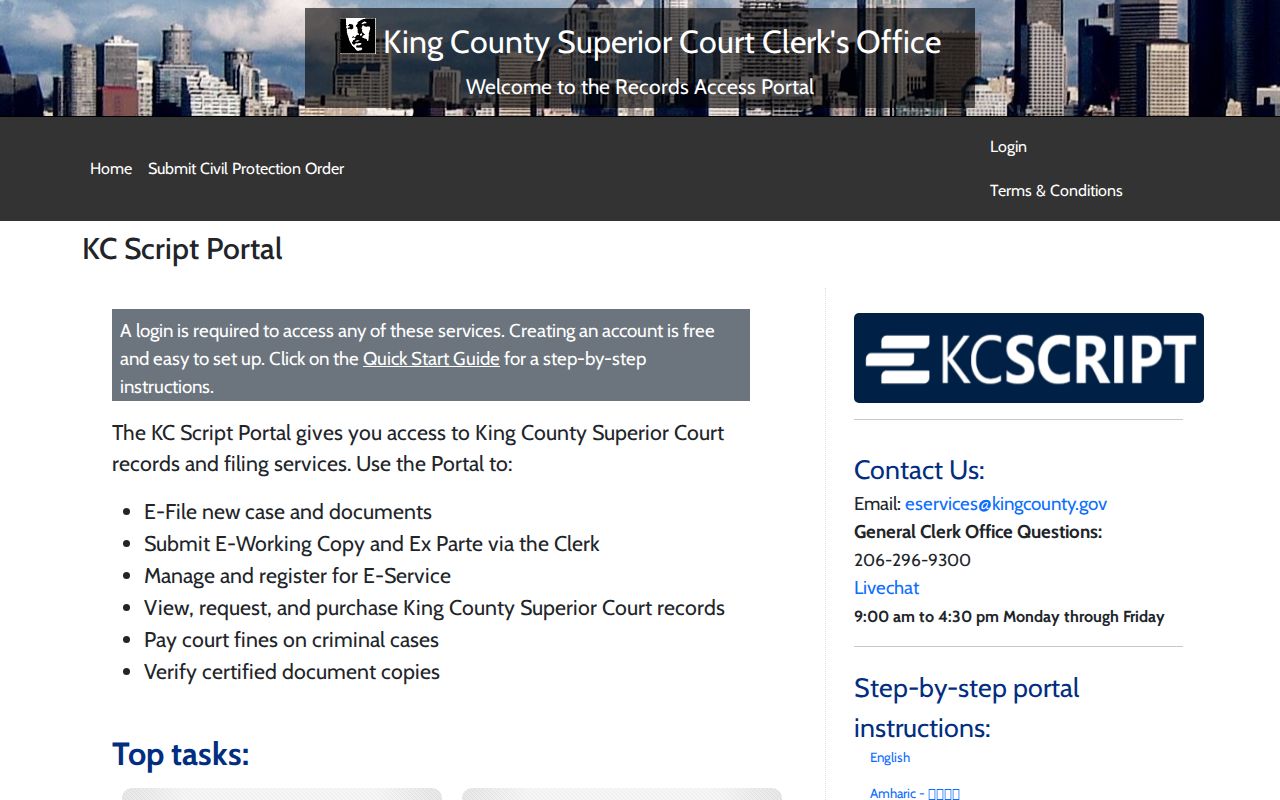
The King portal menu shows why an index hit is only the first step. Open the King docket, check the filed date and status, and read every count rather than treating the King case caption as the final outcome. Pre-2004 documents may call for help from a King County clerk counter in Seattle or Kent.
Searching King County Case Records
Use the King County court named on the citation, charging paper, or hearing notice. A nine-digit King cause number is the fastest key. If it is missing, a full name and date of birth can help the King clerk distinguish similar names. King County District Court's public portal shows filed case information, but full public documents are limited by user role and may need a copy request.
- Choose KC Script for a King Superior Court felony, the KCDC portal for a King District Court matter, or the correct King County municipal court for a city filing.
- Enter the exact cause number when possible. Otherwise, search the King participant name and narrow the result by King court, filing date, and King case type.
- Match the King caption, King court, and King public dates. Do not rely on a name alone when more than one King County result appears.
- Open the King docket and trace each count from the King charging document through amendments, King hearings, disposition, and judgment.
- Request the King judgment, sentence, or certified copy from the King County clerk that owns the case. Use a King court counter or phone route when online documents are not available.
King County District Court provides its own Case Access search rather than placing these cases in KC Script.
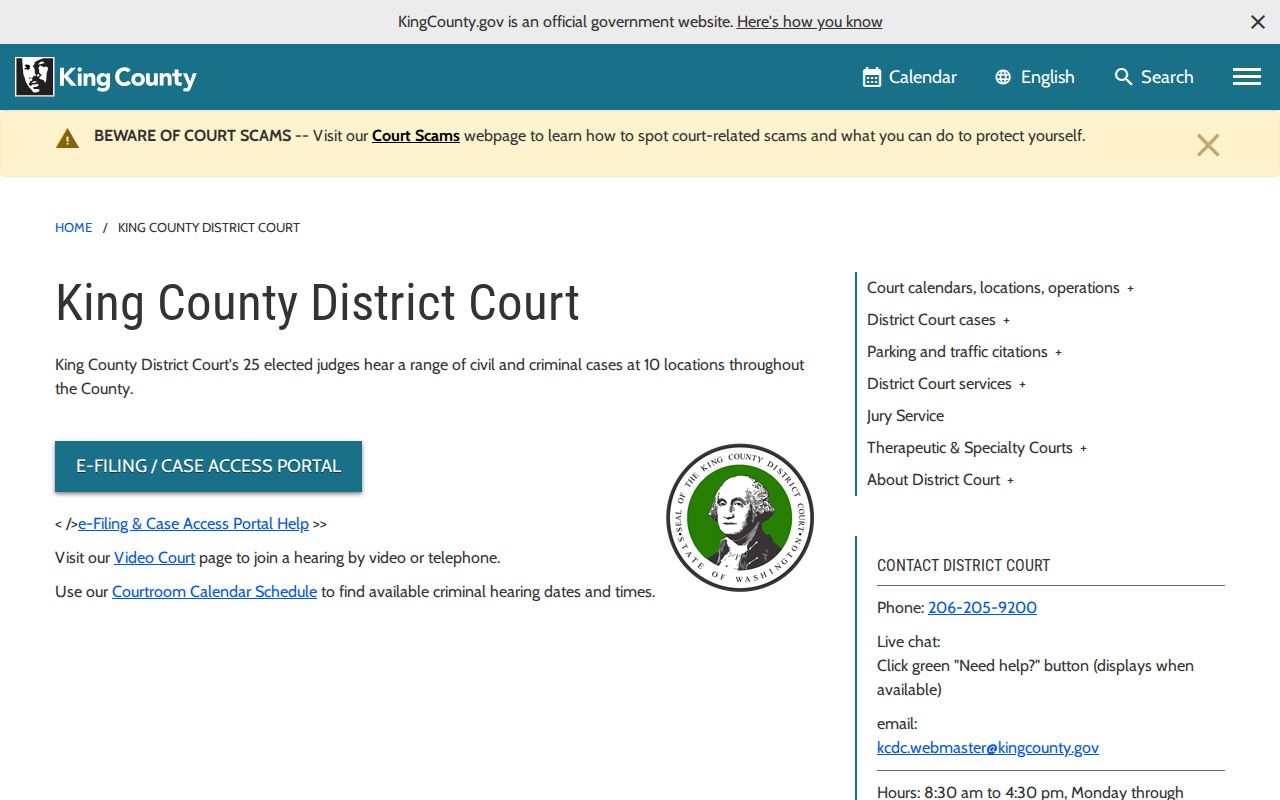
The separate King District Court screen is the correct path for eligible King County limited-jurisdiction records. Its fields differ from the King Superior Court interface.
| Portal | Field | Required | Use |
|---|---|---|---|
| KC Script | Case Number | One search key | King cause number; third digit 1 marks a criminal case |
| KC Script | Participant or Name | Alternative | Full or partial name; compare King public case facts |
| KCDC | Case Number | Alternative | Exact King District Court case number |
| KCDC | Person Name and DOB | Alternative | DOB can aid the search but is not shown in King public results |
| KCDC | Filing Date | Alternative or filter | Single date or date range |
| Washington Courts | Name, Case, or Court Date | One route | State index; choose King court level and county where offered |
King Court Cases Skip Odyssey
The statewide search is useful for an index, yet King County has a major exception. The official Washington Courts Search Case Records entry point routes users to court information, but the Odyssey Portal does not contain King or Pierce County Superior Court cases. Odyssey also excludes courts of limited jurisdiction. A blank Odyssey result cannot establish that no King County criminal court case exists.
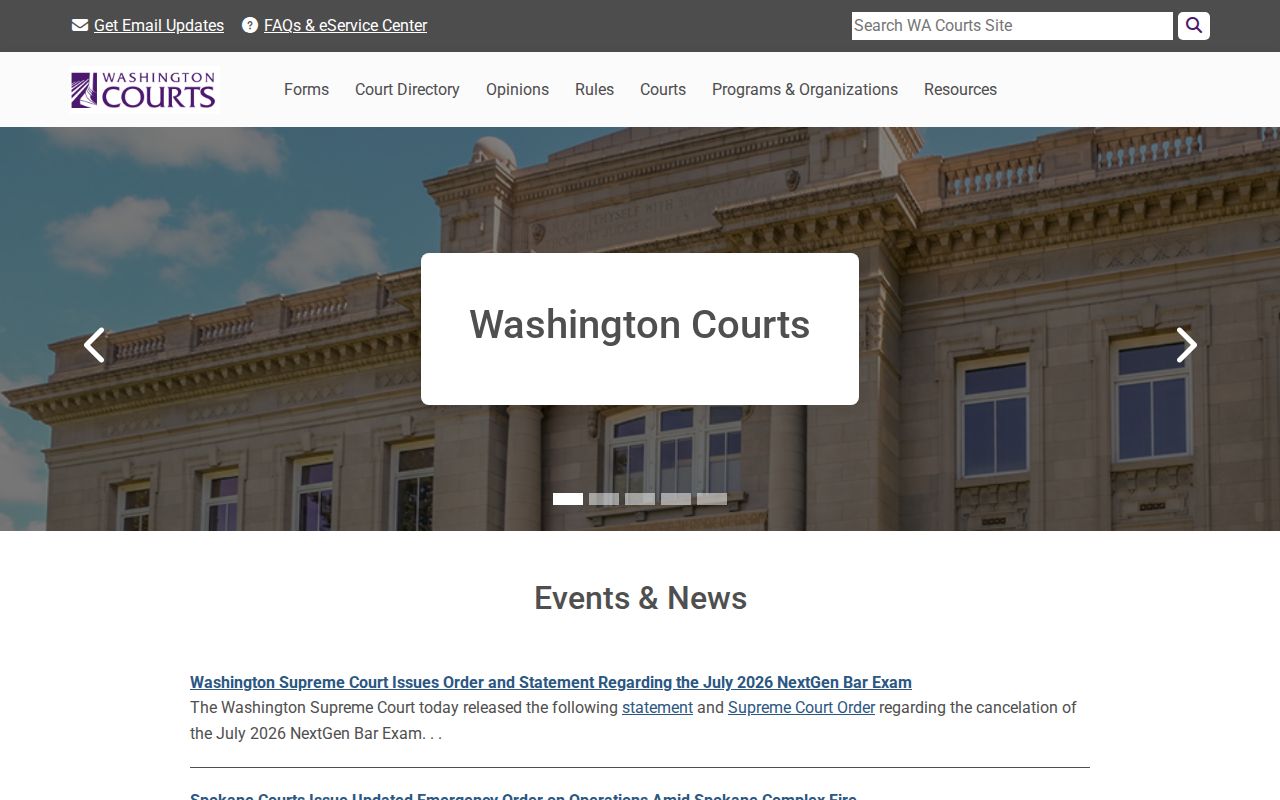
Use the statewide index as a locator, then move to King County's KC Script, KCDC, or the named city court. This King County split is vital when a name search seems to stop too soon.
Inside a King County Case File
A King County court file records the case as filed and decided. It differs from a King police narrative and from a King jail's initial investigation label. The King charging document states the prosecutor's counts. Later King docket entries show pleas, motions, hearings, amended counts, trial activity, and orders. The King judgment and sentence provide the operative outcome. Each count can end differently, so a single case can contain a conviction, dismissal, and amendment at once.
| Case Number and Court | Cause number, filing court, case category, filed date, and current status |
|---|---|
| Charging Document | Complaint or information, alleged statute, charge level, and later amendments |
| Docket Entries | Chronological list of filings, pleas, motions, orders, warrants, reviews, and appeal activity |
| Hearings | Type, date, time, courthouse or courtroom, and calendar information |
| Disposition and Judgment | Result for each count, such as conviction, dismissal, or acquittal |
| Sentence and Conditions | Confinement, probation or community custody, restitution, fines, and public conditions |
| Redactions | Protected birth dates, addresses, account data, and victim or minor information |
Note: A filed charge is an accusation; the disposition and judgment show how the court resolved each count.
Read King County Court Outcomes
A disposition is the result of a charge. It may show conviction, dismissal, or acquittal. A docket is the time-ordered index of court events. An information is the charging paper commonly used for a felony. Arraignment is the hearing where the accused receives the charge and enters a plea. These terms describe distinct events, not new cases.
The KCDC case-access help page explains public fields and document limits.
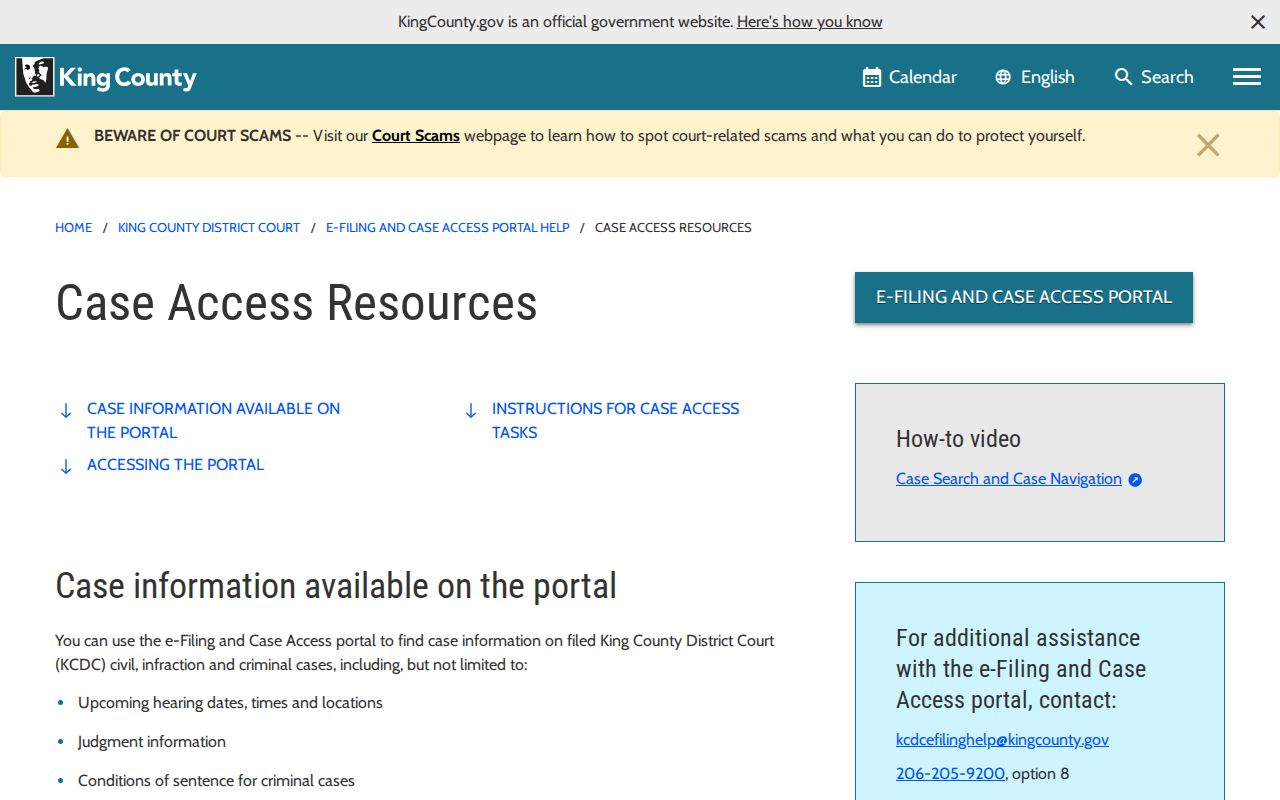
That field guide helps separate a listed hearing from a final judgment. For a Superior Court search without a cause number, the King County Prosecuting Attorney lists criminal-record lookup details.
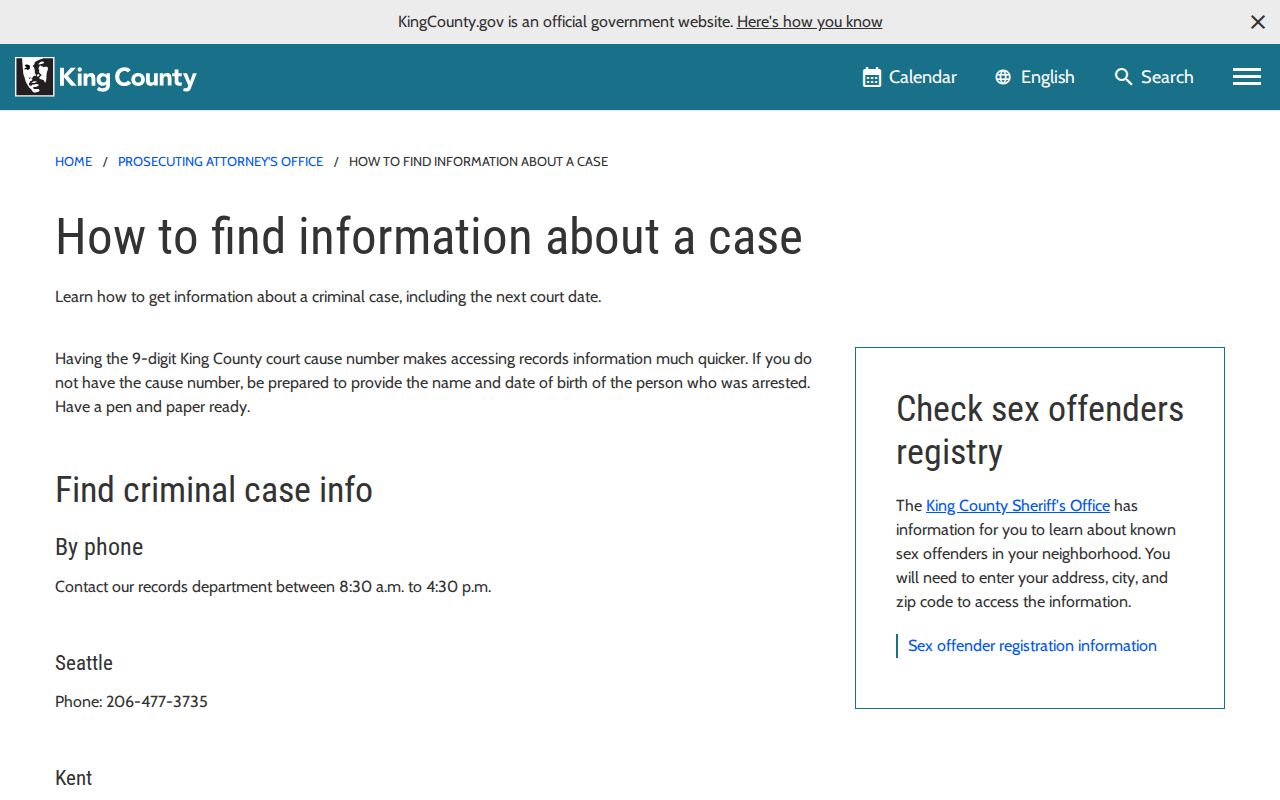
Adult criminal record lines are available from 8:30 a.m. to 4:30 p.m. at 206-477-3735 for Seattle and 206-477-3755 for Kent. Have the name and date of birth ready. The clerk, not the prosecutor, supplies the court document.
How a Criminal Case Moves
After an arrest or citation, a judge addresses probable cause and the first appearance. The prosecutor then chooses whether and what to file. An arraignment follows a filed charge. Discovery, motions, and readiness hearings shape the pretrial period. A plea or trial resolves the facts and law, followed by judgment and sentencing when guilt is established. Appeal or post-conviction entries can extend the docket.
King County case flow: Charges Filed › Arraignment › Pretrial › Plea or Trial › Disposition › Sentencing
A jail's first allegation may change before filing. Likewise, a therapeutic-court review is an event within an existing matter, not proof that King County filed a new charge.
King Court Hubs and Archives
The Seattle Superior Clerk is at 516 Third Avenue, Room E-609, Seattle, WA 98104; the main number is 206-296-9300 and copy help is 206-477-0832. The Kent clerk serves the Norm Maleng Regional Justice Center at 401 Fourth Avenue North, Room 2C, Kent, WA 98032; its Copy Center is 206-477-3012. Public counters generally run from 8:30 a.m. to 4:30 p.m. on weekdays, with limited service periods posted for Seattle.
The Superior Court Clerk describes King County record-access channels, including online, copy-center, and older-file routes.
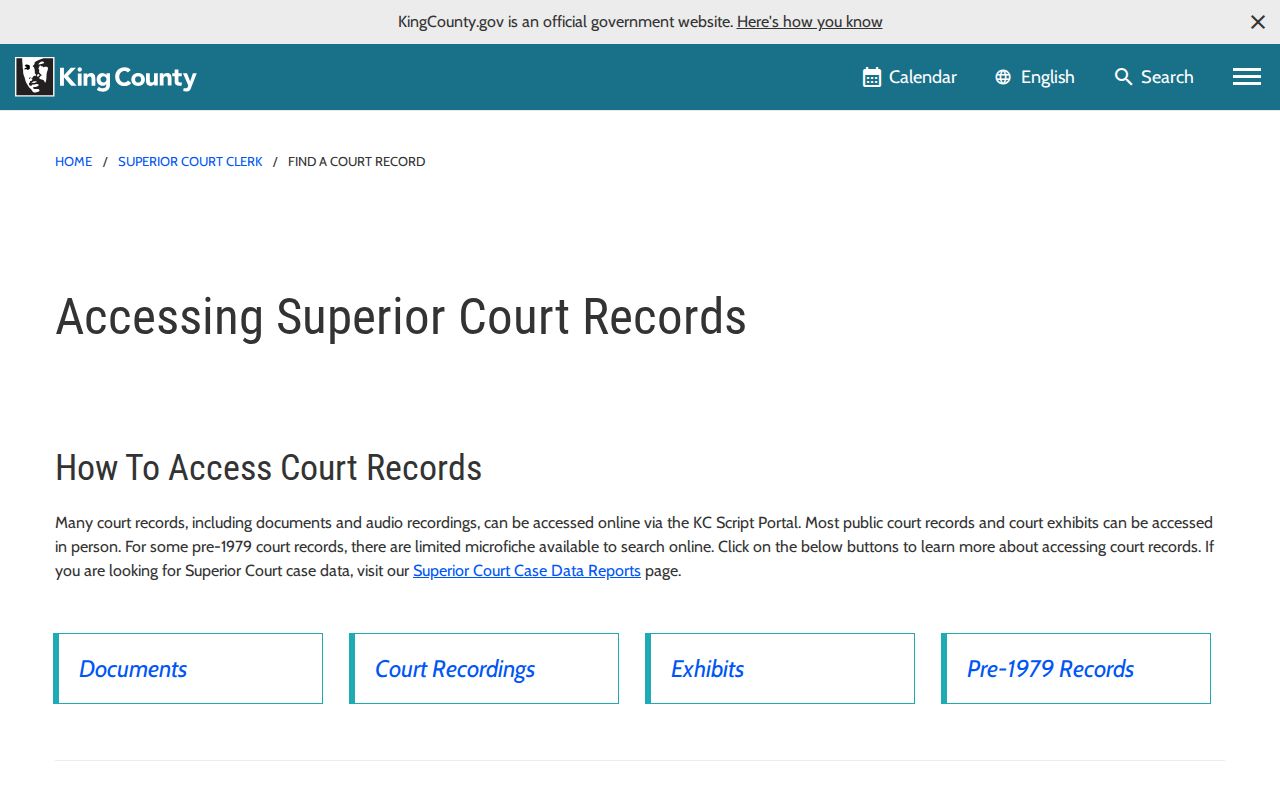
King Superior criminal files date to 1853. Pre-1979 records may require microfilm or archive work. In-person inspection of most public records is free. KC Script certified copies cost $5 for the first page and $1 for each added page.
Case Record Access & Restrictions
Washington General Rule 31 governs public access to court case records and requires personal-identifier safeguards. General Rule 15 controls requests to seal, redact, or destroy court material. These rules differ from the Washington Public Records Act process used for executive agency records. A court clerk may redact a full date of birth, home address, financial account number, or protected victim and minor data while leaving the rest of a public case open.
Juvenile files receive added protection under chapter 13.50 RCW. Sealed cases and documents do not appear like open files. For an absent result, confirm the court, spelling, date range, and portal first. Then ask the owning clerk whether the file predates online access, requires a copy request, or is restricted by rule or court order. Current clerk instructions control the request route.
King Court Reviews Are Not Charges
King County operates Adult Drug Diversion Court, Regional Mental Health Court, and Veterans Court, along with city specialty programs. Their dockets can include frequent reviews, treatment updates, compliance hearings, and graduation events. Those entries relate to program supervision within the underlying criminal court case. They should not be counted as new prosecutions.
Workload figures need the same care. The official 2024 annual report said King Superior criminal filings rose 5.6 percent and reached their highest post-pandemic level. The first quarter of 2025 recorded 1,223 criminal filings, up 4.8 percent in the report's comparison. These are filings, not arrests, convictions, or reported crimes. A person checking one case should rely on that cause number and its disposition, not a countywide trend.